 English

There are places in Bali that can’t be understood through photos alone, you need to stand there and feel the scale. Garuda Wisnu Kencana Cultural Park is exactly one of those places. Built among massive limestone cliffs, this cultural park is one of the strongest expressions of architectural and cultural power on the island.
First Steps Into the Park: Scale and Design
From the moment you enter Garuda Wisnu Kencana, the size of the space becomes immediately apparent. Wide open areas, towering rock formations, and carefully positioned statues make it clear that this is not an ordinary park. Everything here is designed with proportion, perspective, and spatial balance in mind.
It’s not just a place to walk through, it’s an architectural experience that makes you pause and look around.
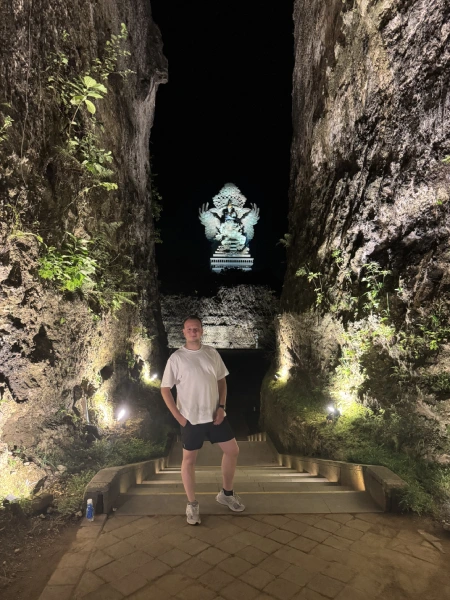
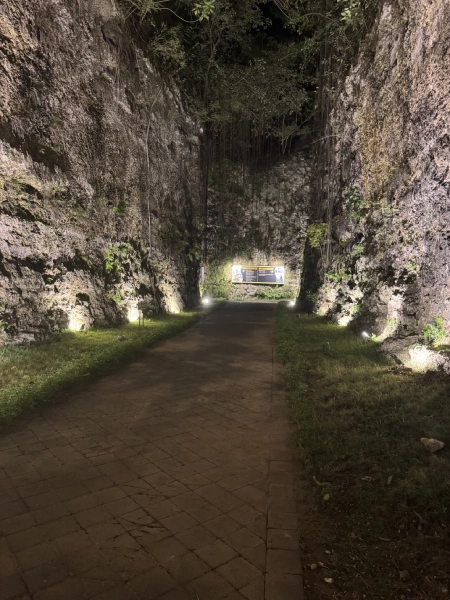
Sculptures Rising From the Cliffs
The park features several major sculptures, and even the ones considered “smaller” feel enormous when viewed up close. The way these statues are embedded within the natural rock formations creates a powerful atmosphere where nature and human-made structures blend seamlessly.
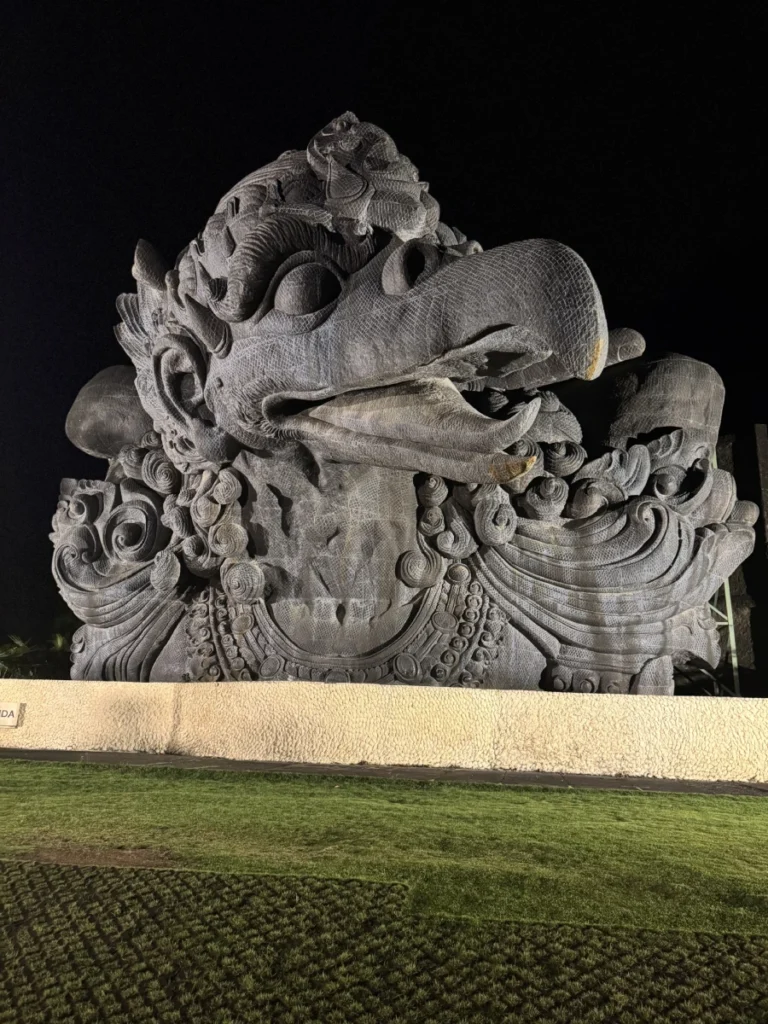
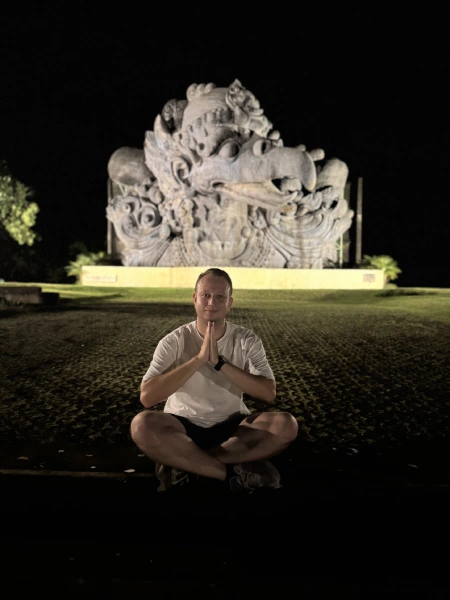
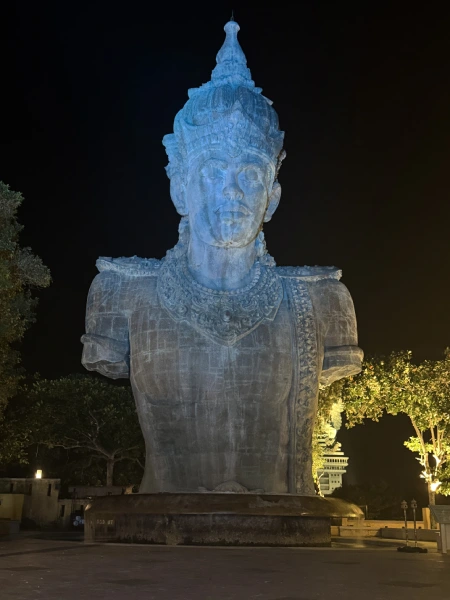
The Garuda Wisnu Statue: The Heart of the Park
Without question, the focal point of the park is the giant Garuda Wisnu statue. Visible even from a distance, its true size becomes overwhelming as you get closer. Its height, details, and placement firmly establish it as the centerpiece of the entire complex.
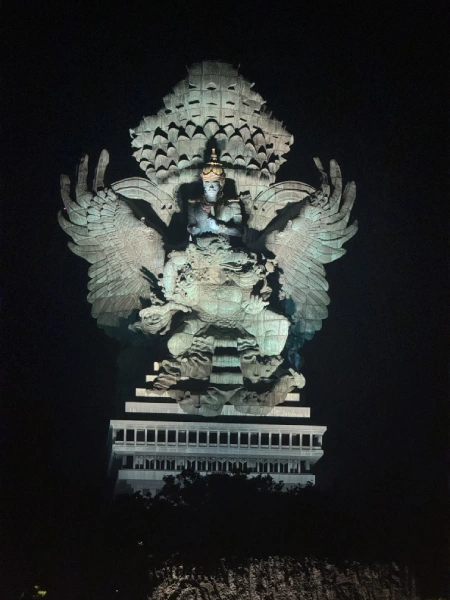
Evening Hours: A Transformed Atmosphere
One of the most impressive aspects of Garuda Wisnu Kencana is its evening lighting. After sunset, the sculptures, cliffs, and pathways are dramatically illuminated. The lighting enhances the park’s architecture and adds depth and intensity to the entire experience, making an evening visit especially rewarding.
The Impression It Leaves Behind
Garuda Wisnu Kencana Cultural Park represents one of the strongest unions of nature, architecture, and cultural symbolism in Bali. Unlike temples that focus on ritual and worship, this place leaves its mark through sheer scale, design, and visual impact.
It’s not simply something you visit, it’s something you feel, and a powerful way to conclude a journey through Bali.